


 Deutsch
 English
 Español
 Français
 Nederlands
 Português


 Share
Share




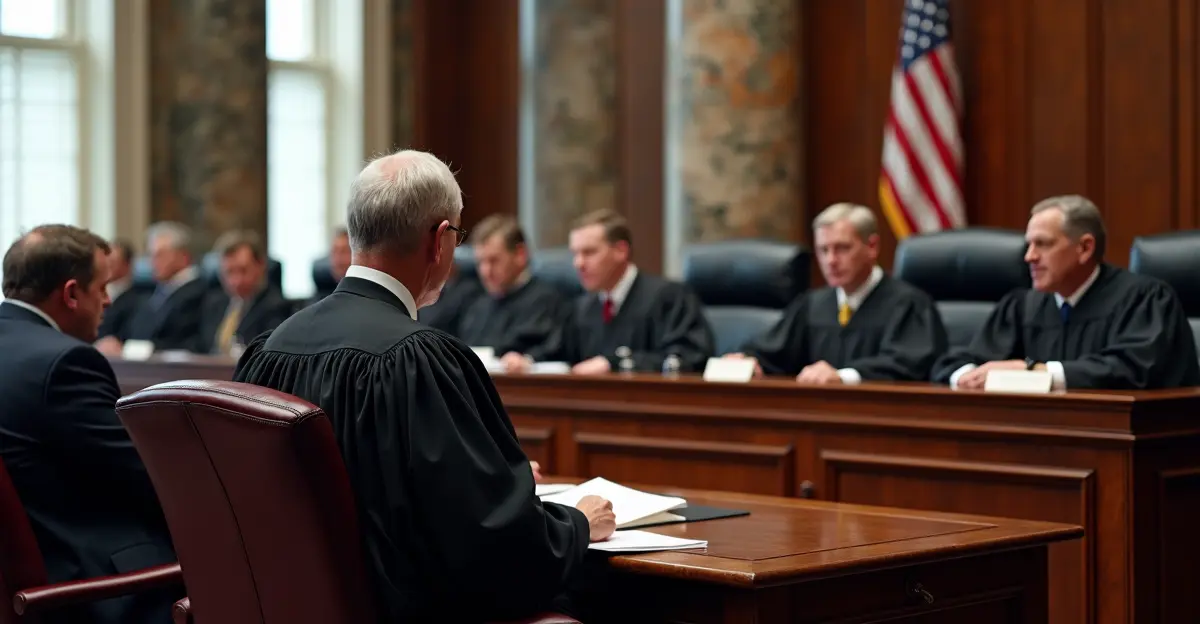
On February 20, 2026, the U.S. Supreme Court delivered a seismic shock to global trade, ruling 6-3 in Learning Resources, Inc. v. Trump that the International Emergency Economic Powers Act (IEEPA) does not authorize the president to impose tariffs. The landmark IEEPA tariff ruling invalidated over $200 billion in annual tariff revenue and stripped the executive branch of its primary leverage tool just as geopolitical tensions escalate. Chief Justice John Roberts authored the opinion, holding that IEEPA's grant of authority to 'regulate … importation' does not include the power to levy duties.
What Was the IEEPA Tariff Ruling?
The case consolidated two appeals—Learning Resources, Inc. v. Trump and Trump v. V.O.S. Selections, Inc.—challenging tariffs imposed in 2025 under IEEPA on Canada, Mexico, China, and other nations. The Court affirmed the Federal Circuit's August 2025 ruling that IEEPA's emergency economic powers cannot be used to impose tariffs. Section 232 steel and aluminum duties and Section 301 China tariffs remain intact, but the invalidated IEEPA tariffs had generated approximately $211 billion in revenue. The decision does not order immediate refunds, yet importers have begun filing claims that could exceed $130 billion. See Section 232 tariff exemption process for related trade authority limits.
Immediate Economic and Geopolitical Fallout
Within hours, the administration pivoted to Section 122 of the Trade Act of 1974, imposing a temporary 10% global tariff effective February 24, 2026, later raised to 15%—the statutory maximum—for up to 150 days. This reduced the average U.S. tariff rate from about 16.8% to 9.0%, then back to roughly 13.6%, preserving nearly 80% of previous tariff levels. The global tariff rate 2026 remains volatile as firms recalibrate.
China Emerges as Biggest Winner
Analysts at Morgan Stanley estimate that new weighted average tariffs on Chinese goods will fall from 32% to 24%, a significant easing for Beijing. China's record $1.2 trillion trade surplus and rare-earth export restrictions give it leverage ahead of the March 31 Trump-Xi summit. As CNN reports, the ruling strips Washington of key leverage over Beijing, and Beijing has urged Washington to remove unilateral tariffs, warning the U.S.-China trade truce remains fragile. The US-China trade truce 2026 now faces renewed strain.
EU Suspends Turnberry Deal Work
The European Parliament's International Trade Committee suspended work on the Turnberry Deal files on February 23, 2026, citing lack of legal certainty. Committee chair Bernd Lange said, 'The ruling is clear and unequivocal—a key US instrument for negotiating and implementing the Turnberry Deal is no longer available.' He warned that Section 122 pushes EU imports above the 15% threshold, departing from Turnberry terms. The EU-US trade relationship is now in limbo, with scheduled votes cancelled.
What the Ruling Means for Multinational Supply Chains
Multinational firms face a fragmented tariff landscape: Section 232 and 301 duties remain, while IEEPA tariffs are void and Section 122 is temporary. Importers must recalculate landed costs, file refund claims before liquidation deadlines, and monitor the 150-day clock. CBP confirmed IEEPA duties are no longer collected after February 24. Refund claims could exceed $130 billion, creating cash-flow opportunities but also administrative burdens. Companies must adjust global supply chain strategies now.
Constitutional Realignment of Trade Power
The ruling marks a major constitutional shift, reasserting Congress's authority over foreign commerce. Section 122's 150-day limit forces the president to seek congressional approval for any lasting tariff regime. This could trigger a legislative battle over tariff policy, with potential for permanent trade legislation. The decision may also constrain future use of emergency economic powers for non-trade purposes. As one trade attorney noted, 'The executive's unilateral tariff toolbox has been significantly narrowed.'
Frequently Asked Questions
Did the Supreme Court order tariff refunds?
No. The Court invalidated IEEPA tariffs but left repayment questions open. Importers must file refund claims with CBP, and retroactive refunds could exceed $130 billion.
Which tariffs remain in effect after the ruling?
Section 232 steel/aluminum tariffs, Section 301 China tariffs, and Section 201 safeguards remain. The temporary Section 122 global tariff of 15% is in effect until July 24, 2026.
Can Congress reinstate the tariffs?
Yes. The president's Section 122 authority expires after 150 days, so Congress must pass legislation to make any tariffs permanent.
Conclusion and Outlook
The Supreme Court's IEEPA tariff ruling has rewritten the rules of global trade overnight. With over $200 billion in tariffs invalidated and Washington scrambling under a temporary statute, the balance of power has shifted toward Congress and foreign rivals. Multinationals must navigate refunds, new tariffs, and supply chain uncertainty, while the EU and China recalibrate. The next 150 days will determine whether the U.S. trade regime stabilizes or descends into further legal and geopolitical turbulence.




Follow Discussion